What Is Your Deck Really Made Of? A Friendly Guide to Decking Materials
Most people never think about the material under their feet until something goes wrong. Yet the boards on a deck are the product of a surprising amount of chemistry, forestry and engineering. Whether your platform is brand new or has seen twenty summers, knowing what it is made of helps you understand how it ages and how to care for it.
Pressure-Treated Pine: The Workhorse
The most common decking material in the Midwest is pressure-treated lumber, usually southern yellow pine. The wood is placed in a large cylinder, and preservatives are forced deep into its fibers under pressure. The chemicals protect it from rot and insects, which is why it can sit outdoors for years.
What many homeowners don’t know is that the formula has changed. For decades, the standard treatment contained arsenic. Lumber made that way was phased out of most residential uses at the end of 2003, and today’s treated wood relies mainly on copper-based compounds.
That copper explains two things. It gives fresh treated lumber its faint green tint. It is also why manufacturers recommend coated or stainless steel fasteners, because copper can speed up corrosion in plain steel.
Older decks may still be built from the earlier generation of lumber. If you are searching for deck repair near me Bolingbrook to fix a deck that dates back to the 1990s, mention the age of the wood. It affects how old boards should be handled and disposed of.
Cedar and Redwood: Naturally Resistant
Cedar and redwood contain natural oils and tannins that help them resist decay and insects without chemical treatment. They are lighter than pine, smell wonderful when cut and are prized for their warm color. The trade-off is softness. These woods dent more easily, and their protective compounds slowly leach out over time, so they still benefit from regular sealing.
Tropical Hardwoods: Almost Indestructible
At the high end are tropical hardwoods like ipe, sometimes called Brazilian walnut. Ipe is so dense that it can sink in water, and so hard that installers need carbide-tipped blades to cut it. It can last decades with minimal care, and it holds up remarkably well against fire.
The downsides are price, weight and questions about sustainable harvesting. Buyers often look for certified sources for that reason.
Composite: The Newcomer
Composite decking appeared in the 1990s and has grown rapidly since. The boards are a blend of wood fibers and plastic, often recycled from grocery bags and packaging film, so a single composite deck keeps a surprising amount of plastic out of landfills.
Composites don’t splinter and never need staining, but they are not maintenance-free. They can get hot in direct sun, develop mildew in shady spots and show scratches from furniture.
People looking for deck repair near me Downers Grove are increasingly dealing with composite boards installed in the early 2000s. First-generation composites sometimes faded or flaked more than expected. Replacing a few boards can be tricky, because colors and profiles have changed over the years.
PVC and Aluminum: The Outliers
Some decks use boards made entirely of PVC, with no wood content at all. They are lighter than composite and very resistant to moisture. Aluminum decking is rarer in backyards but shows up on rooftops and docks, where its strength and fire resistance matter most.
The Hidden Part: Framing
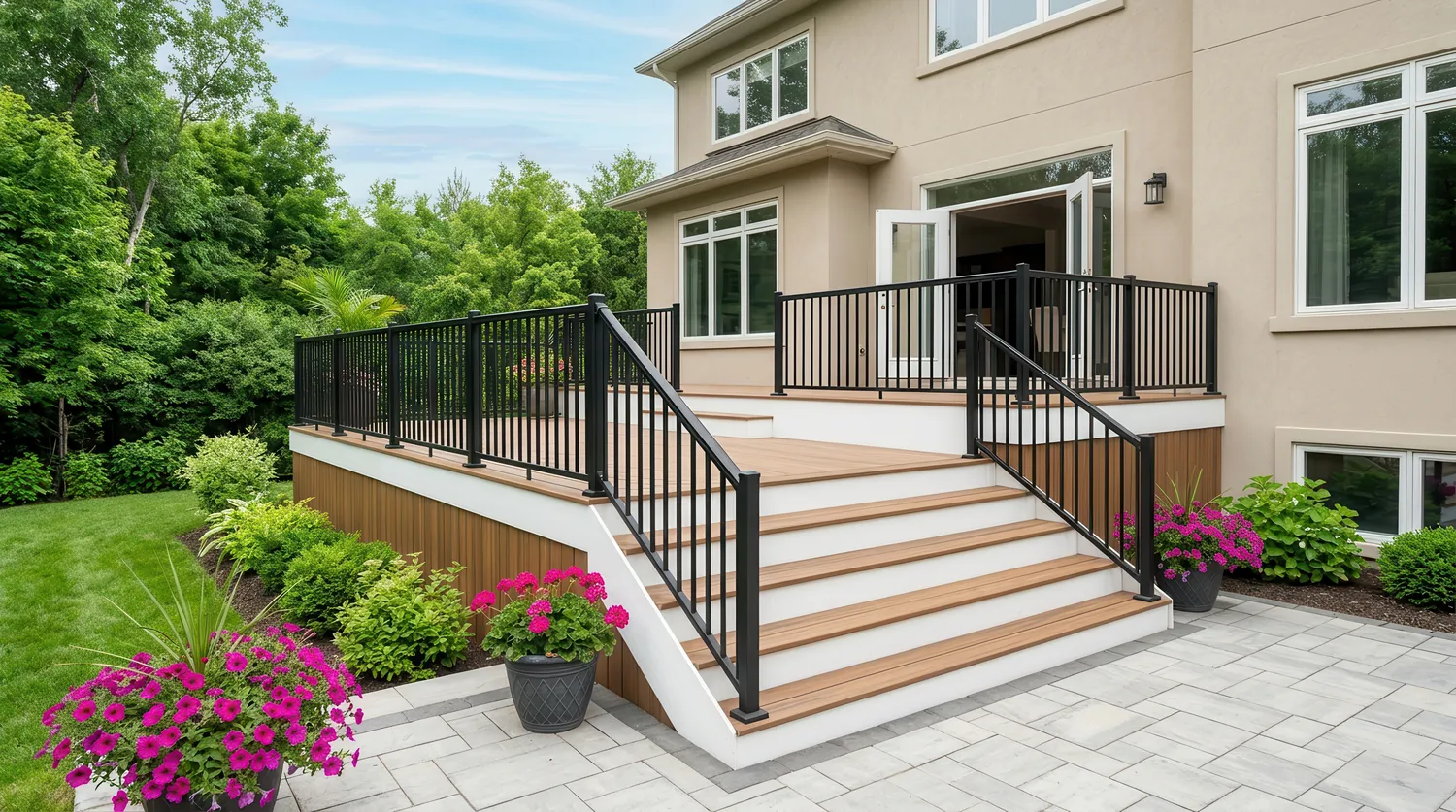
Whatever the surface looks like, nearly every deck sits on a frame of pressure-treated joists, beams and posts. That frame is where serious trouble usually begins.
A homeowner might replace every surface board with composite and forget that the joists underneath are as old as before. Water that collects on top of joists, especially around screw holes, can cause rot that is invisible from above.
This is why a deck that looks fine can still have hidden problems. Any search for deck repair near me Bolingbrook should include a look underneath the boards. Joist tape, proper spacing and good drainage all help protect the frame, whatever material sits on top.
Choosing What’s Right for You
There is no single best decking material:
- Pressure-treated pine is affordable and familiar.
- Cedar is beautiful and natural.
- Ipe is tough and long-lived.
- Composite and PVC trade some natural charm for lower upkeep.
The right choice depends on your budget, how much time you want to spend on maintenance and how you plan to use the space.
Material Matters, but So Does Care
Every material ages, and every deck eventually needs some attention. A loose railing, a cracked board or a soft spot near the house are all signs worth taking seriously. If you notice them, a quick search for deck repair near me Downers Grove can help you deal with small issues before they turn into expensive ones. Then your deck will keep serving you well, no matter what it is made of.